
Can Stress Cause Erectile Dysfunction? The Urban India Connection (2026)
India’s urban workforce is under siege.
The 2025 Gallup State of the Global Workplace report found that 30% of Indian employees experience daily stress, while 49% are actively looking for a new job. The CII–MediBuddy Corporate Wellness Index paints an even grimmer picture: 86% of Indian corporate employees report struggling with mental health issues, and India’s burnout rate of 78% far exceeds global averages.
But here’s what most men don’t connect: this relentless stress isn’t just destroying their productivity and sleep — it’s quietly wrecking their sex lives. Stress and erectile dysfunction are deeply interlinked, and for millions of Indian men working 10–12 hour days in Bengaluru, Mumbai, Delhi NCR, and Hyderabad, erection problems are becoming the silent collateral damage of corporate ambition.
Research from urban Indian clinics shows that nearly 40% of men above 30 report problems related to erection loss or performance anxiety, yet only 15% ever seek help. A 12-expert advisory board of Indian urologists and psychiatrists (2025) confirmed that stress, anxiety, and depression are among the most significant contributors to erectile dysfunction in the Indian context.
If you’re an Indian man wondering whether your work stress, financial pressure, or burnout could be causing your erection problems — the answer is a definitive yes.
And you’re far from alone: thousands of Indian men in their 20s and 30s are experiencing the exact same stress–ED pattern, even though most never talk about it.
This guide will show you exactly how it happens, how to spot it, and what to do about it.
For a complete understanding of all ED causes and treatments, read our complete guide to erectile dysfunction for Indian men.
Chronic stress floods your body with cortisol, which suppresses testosterone, constricts blood vessels, blocks nitric oxide production, and keeps your nervous system stuck in “fight-or-flight” mode — all of which directly prevent erections. The good news: stress and erectile dysfunction are deeply connected — but this is among the most reversible forms.
| What is Stress Related Erectile Dysfunction?
Stress-related erectile dysfunction is the inability to achieve or maintain an erection caused primarily by chronic psychological stress, elevated cortisol levels, and sympathetic nervous system activation — rather than by physical conditions like diabetes or cardiovascular disease. Also called psychological erectile dysfunction or stress impotence, it is one of the most common forms of ED in men under 40 and is considered highly reversible with lifestyle intervention, stress management, and targeted natural support. |
How Stress Causes Erectile Dysfunction (Psychological ED Explained)
Chronic stress causes erectile dysfunction through 5 measurable biological pathways: cortisol suppresses testosterone, the sympathetic nervous system blocks blood flow, nitric oxide production drops, brain chemistry disrupts arousal signals, and performance anxiety creates a self-reinforcing cycle.
This isn’t “all in your head” — it’s a documented process involving your hormones, blood vessels, nerves, and brain chemistry:
1. The Cortisol–Testosterone Collision
When you’re stressed, your adrenal glands produce cortisol — the primary stress hormone. Cortisol is designed for short-term survival: it raises blood sugar, increases alertness, and sharpens focus. But when stress is chronic (as it is for most urban Indian professionals), cortisol remains permanently elevated.
Here’s the problem: cortisol and testosterone are made from the same precursor hormone (pregnenolone). When your body is constantly producing cortisol, it diverts resources away from testosterone production — a phenomenon endocrinologists call the “pregnenolone steal.”
A Japanese study published in the International Journal of Impotence Research (PubMed) found that bioavailable cortisol showed significant negative correlations with erectile function scores, confirming that men with higher active cortisol had worse erections.
Meanwhile, a landmark JAMA study from the University of Chicago found that just one week of sleeping 5 hours per night — common among Indian IT professionals — reduced testosterone levels by 10–15%, equivalent to ageing 10–15 years in hormonal terms.
2. Sympathetic Nervous System Overdrive
Erections require your body to be in a relaxed, parasympathetic (rest-and-digest) state. Sexual arousal triggers the parasympathetic nervous system, which releases nitric oxide, relaxes smooth muscle, and allows blood to fill the penis.
Chronic stress does the opposite. It keeps your sympathetic nervous system (“fight-or-flight”) permanently activated. When adrenaline and norepinephrine are surging through your body, your blood vessels constrict, blood is diverted to your muscles and brain, and the relaxation needed for an erection becomes biologically impossible. You can’t be in “fight-or-flight” and “sexual arousal” at the same time — they are mutually exclusive nervous system states.
3. Nitric Oxide Suppression
Nitric oxide (NO) is the master molecule of erections. It signals penile blood vessels to relax and expand, allowing the rush of blood that creates rigidity. Chronic stress directly impairs nitric oxide production through two mechanisms: elevated cortisol reduces NO synthase activity, and persistent sympathetic activation overrides the parasympathetic signals that trigger NO release. This is the same pathway that PDE5 inhibitor drugs like sildenafil and tadalafil target — but stress undermines it at the source.
4. Brain Chemistry Disruption
Chronic stress alters key neurotransmitters involved in sexual desire and arousal. It depletes serotonin (causing mood disturbances and reduced libido), reduces dopamine (the “reward” chemical that drives sexual motivation), and increases norepinephrine (keeping you wired and anxious). This triple neurotransmitter disruption means that even if the blood flow pathways were working perfectly, your brain may not generate the arousal signals needed to initiate an erection.
5. The Performance Anxiety Cycle
Perhaps the most devastating pathway is psychological. When a stressed man experiences his first erection failure, it often triggers performance anxiety — fear of failing again. This fear itself activates the sympathetic nervous system, releasing more cortisol and adrenaline, which makes the next erection even harder to achieve.
The result is a self-reinforcing cycle: stress → ED → anxiety about ED → more stress → worse ED.
Indian sexologists report that this cycle is one of the most common presentations they see in urban clinics, particularly among men aged 25–40.
>> Stress & ED in India: The Numbers <<
- 86% of Indian corporate employees report mental health struggles (CII–MediBuddy 2025)
- 78% burnout rate in Indian corporate sector — far exceeding global averages
- 76% of Indian workers report feeling “rattled or overworked” (ADP Research 2024)
- 40% of urban Indian men above 30 report erection problems or performance anxiety
- Only 15% of Indian men with ED ever discuss the problem with a doctor
- 10–15% testosterone drop from just one week of sleeping ≤5 hours/night (JAMA)
- 30% reduction in cortisol with Ashwagandha supplementation (clinical trials)
Why Urban Indian Men Are Especially Vulnerable?
The stress–ED connection isn’t unique to India, but several factors make urban Indian men disproportionately vulnerable:
Toxic Work Culture and Long Hours
India’s corporate culture normalises 10–14 hour workdays, especially in IT, banking, consulting, and startups. The Gallup 2025 report found that 49% of Indian employees are actively job-hunting — a clear sign of widespread dissatisfaction and chronic occupational stress. YourDOST’s survey found that over 45% of employees experience anxiety every Sunday evening just thinking about returning to work.
This sustained anticipatory stress keeps cortisol elevated even on days off. The connection between work stress and erection problems is direct: the longer and more intensely you work without recovery, the higher your cortisol stays and the harder erections become.
Can stress cause erectile dysfunction? For urban Indian men, the answer is overwhelmingly YES.
Financial Pressure and EMI Culture
Urban Indian men face a unique cocktail of financial stressors: home loan EMIs, car loans, education expenses, family obligations, and the pressure to maintain a certain lifestyle. Unlike Western contexts, Indian men are often the sole or primary earner for extended families. This financial burden creates a chronic low-grade stress that rarely lets up and directly impacts sexual health through sustained cortisol elevation.
Commute Stress
The average commute in cities like Bengaluru, Mumbai, and Delhi NCR ranges from 1.5 to 3 hours daily. This isn’t passive time — it’s an active stressor involving traffic rage, pollution exposure, crowded public transport, and lost personal time. By the time many men reach home, they’re physically and mentally depleted, with no energy for intimacy.
Sleep Deprivation
Urban Indian professionals are among the most sleep-deprived populations globally. Late work nights, early meetings, screen addiction, and stress-induced insomnia mean many men average 5–6 hours of sleep. Research consistently shows that men sleeping fewer than 6 hours have significantly lower testosterone levels. One JAMA study found that restricting sleep to 5 hours cut testosterone levels by 10–15%. Since testosterone production peaks during deep sleep (specifically the final REM cycles before waking), losing even 1–2 hours of sleep directly reduces the hormonal fuel needed for erections.
Digital Overload and “Always-On” Culture
Smartphones, Slack notifications, WhatsApp work groups, and late-night emails mean the average Indian professional never truly “switches off.” This digital hyperconnectivity keeps the sympathetic nervous system chronically activated. The blue light from screens also suppresses melatonin production, further worsening sleep quality and compounding the stress–testosterone–ED cascade.
Stigma Around Mental and Sexual Health
Indian society still treats both mental health struggles and sexual dysfunction as personal failures rather than medical conditions. A 2025 expert advisory board of Indian urologists and psychiatrists noted that this stigma is deeply rooted in societal norms where ED is perceived as emasculation. Men suffer in silence, which prolongs the stress cycle and allows both the psychological and physical damage to worsen. In rural and semi-urban areas, the barriers are even more severe.
Warning Signs: Is Stress Causing Your Erectile Dysfunction?
Yes, you can tell if stress is causing your ED. Stress-related erectile dysfunction has 6 distinct warning signs that differentiate it from physical ED: morning erections are still present, ED appeared suddenly, symptoms fluctuate with stress levels, and so on.
Let’s understand all the warning signs one by one:
- Erections are fine when relaxed, but fail under pressure: You can get erections during masturbation or on weekends/holidays, but struggle during intercourse — especially after stressful workdays. This strongly suggests a psychological/stress component.
- Morning erections are still present: If you’re waking up with firm morning erections but failing during sex, the plumbing is working. The problem is likely stress, anxiety, or a combination.
- ED appeared suddenly: Physical ED from diabetes or heart disease develops gradually over months or years. Stress-related ED often appears suddenly, usually coinciding with a new job, financial crisis, relationship conflict, or major life change.
- You’re experiencing other stress symptoms: Insomnia, irritability, frequent headaches, jaw clenching, digestive issues, muscle tension, and low motivation often accompany stress-related ED. If you have several of these alongside erection problems, stress is very likely the primary driver.
- Your libido has dropped alongside your stress: Physical ED often preserves desire — you want sex but can’t perform. Stress-related ED frequently reduces desire itself, because cortisol directly suppresses the brain’s sexual motivation centres.
- Your partner has noticed changes: If your partner has noticed you’re avoiding intimacy, finding excuses to go to bed late, or becoming irritable around the topic of sex, they’re likely already worried — even if they haven’t said anything. Partners often recognise the pattern before the man himself does.
- You’re under 40: While ED can affect any age, stress-related ED is increasingly common in men aged 25–40 — the peak career-building years. If you’re in this age group with no diabetes, no heart disease, and no smoking history, stress is the most likely cause.
[table “3” not found /]If you’re experiencing erection problems more than 50% of the time for more than 3 months, see a doctor regardless of suspected cause. As our comprehensive ED guide explains, even stress-related ED can develop a physical component over time if cortisol remains elevated long enough to cause lasting vascular damage.
How to Fix Stress-Related Erectile Dysfunction: A Science-Backed Action Plan
Erectile dysfunction caused by stress can often be significantly improved within 4–12 weeks through 6 evidence-backed strategies: targeted stress reduction, regular exercise, sleep optimisation, dietary changes, professional support (including CBT), and adaptogenic herbs like Ashwagandha.
Unlike vascular ED from diabetes or smoking, stress-related ED is among the most reversible forms because once you lower cortisol and re-activate the parasympathetic nervous system, the erection mechanism recovers naturally.
Here’s the complete plan:
1. Targeted Stress Reduction Techniques
Mindfulness meditation: A growing body of evidence supports mindfulness-based stress reduction (MBSR) for improving sexual function. Even 10–15 minutes of daily meditation reduces cortisol, activates the parasympathetic nervous system, and improves the mental presence required for arousal. Apps like Headspace, Calm, or the free Insight Timer offer guided sessions specifically for stress and sleep.
Deep breathing exercises (Pranayama): The Indian tradition of pranayama is now backed by modern science. Techniques like Anulom Vilom (alternate nostril breathing) and Bhramari (humming bee breath) directly stimulate the vagus nerve, shifting your body from sympathetic to parasympathetic dominance. Practice for 5–10 minutes before bed and before intimacy.
Progressive muscle relaxation: Systematically tensing and releasing muscle groups from your toes to your head reduces physical tension, lowers cortisol, and helps your body learn to shift into the relaxed state needed for erections. This technique is especially effective for men who hold stress in their body (jaw clenching, shoulder tension, back pain).
2. Exercise: The Most Powerful Anti-Stress, Pro-Erection Tool
Regular aerobic exercise is arguably the single most effective intervention for stress-related ED. It works on multiple fronts simultaneously: lowers cortisol, boosts testosterone, increases nitric oxide production, improves cardiovascular health, releases endorphins, and improves sleep quality. A meta-analysis of 11 clinical trials found that aerobic exercise improved erection scores by an average of 2.8 points on the IIEF scale, with more severe cases showing improvements of nearly 5 points.
What to aim for: 150–200 minutes per week of moderate-intensity activity — brisk walking, swimming, cycling, jogging, or gym sessions. Add Kegel exercises (pelvic floor training) daily for direct erection support. Even a 30-minute morning walk before work can meaningfully reduce cortisol for the rest of the day.
Yoga: Combines physical exercise with stress reduction. Poses like Paschimottanasana (seated forward bend), Dhanurasana (bow pose), and Ashwini Mudra directly improve pelvic blood flow while reducing stress hormones. A regular yoga practice addresses both the physical and psychological dimensions of stress-related ED simultaneously.
3. Sleep Optimisation
Sleep is when your body produces the majority of its testosterone and repairs stressed blood vessels. Protecting your sleep is protecting your erections.
- Target 7–8 hours: Non-negotiable. Men sleeping fewer than 6 hours consistently face measurably lower testosterone. Even adding just 1 extra hour of sleep can make a noticeable difference.
- No screens 60 minutes before bed: Blue light from phones suppresses melatonin. Switch to reading, meditation, or conversation after 10 PM.
- Consistent wake time: Your hormonal rhythms depend on regularity. Wake at the same time every day, even on weekends.
- Cool, dark bedroom: Optimal sleep temperature is 18–20°C. Use blackout curtains and switch off all standby lights.
The link between cortisol and erectile dysfunction becomes especially clear when sleep is compromised.
4. Diet for Stress Recovery and Erection Support
What you eat directly impacts both your stress response and your erectile function. Focus on these evidence-backed dietary strategies:
- Magnesium-rich foods: Magnesium calms the nervous system and supports testosterone production. Eat pumpkin seeds (kaddu ke beej), dark chocolate (70%+ cacao), spinach (palak), almonds (badam), and bananas. Many stressed men are magnesium-deficient without knowing it.
- Nitric oxide–boosting foods: Beetroot (chukandar), spinach, methi leaves, pomegranate (anaar), and watermelon (tarbooz) increase nitric oxide production, directly supporting blood flow to the penis.
- Omega-3 fatty acids: Walnuts (akhrot), flaxseeds (alsi), and fatty fish reduce inflammation and support endothelial function. They also improve mood and reduce anxiety.
- Limit caffeine after 2 PM: Caffeine keeps cortisol elevated. Switch to green tea or herbal teas (Ashwagandha tea, chamomile) in the afternoon.
- Reduce refined sugar and ultra-processed foods: They spike blood sugar, worsen insulin resistance, increase inflammation, and amplify stress responses. Swap maida-based snacks for millets (bajra, jowar, ragi), dal, and whole grains.
5. Professional Support
Cognitive Behavioural Therapy (CBT): Cognitive Behavioural Therapy (CBT): CBT is the gold-standard psychological ED treatment in India and worldwide for stress-related and performance anxiety ED. It helps you identify and restructure the thought patterns that drive the stress–ED cycle. Several Indian platforms now offer affordable, confidential online CBT sessions — making professional psychological ED treatment accessible even in Tier-2 cities.
Couples counselling: If stress is damaging your relationship alongside your erections, involving your partner in the recovery process can be transformative. Many Indian couples carry unspoken resentment, communication gaps, and unaddressed emotional wounds that compound sexual dysfunction.
Medical evaluation: Even if you suspect stress is the primary cause, get a basic evaluation: testosterone levels, blood sugar (HbA1c), lipid profile, and thyroid function. This rules out co-existing physical causes and gives you a clear baseline for tracking improvement.
6. Natural and Ayurvedic Stress-Adaptive Support
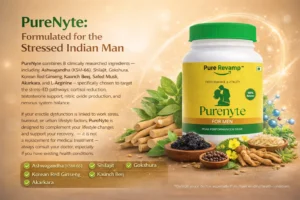
For men whose erectile dysfunction is driven by chronic stress and cortisol imbalance, adaptogenic herbs — those that help the body resist and recover from stress — offer targeted support that directly addresses the cortisol–testosterone imbalance driving the condition:
- Ashwagandha (KSM-66): The most clinically studied adaptogen for stress. A meta-analysis of 9 randomised controlled trials (558 participants) found that Ashwagandha significantly reduced perceived stress, anxiety (Hamilton Anxiety Scale), and serum cortisol levels compared to placebo. A 60-day RCT using 300mg of high-concentration extract found substantially reduced serum cortisol (P=0.0006), while a separate study using 600mg KSM-66 showed a 32% reduction in cortisol and increased testosterone in males.
- Shilajit: Contains fulvic acid and 84+ trace minerals. Research shows it supports relaxation of erectile tissue through parasympathomimetic effects and boosts cellular energy production. Particularly beneficial for men experiencing fatigue alongside stress-related ED.
- Korean Red Ginseng: A meta-analysis of randomised trials showed significant improvement in erectile function scores. Ginseng modulates the HPA axis (stress hormone system) and supports nitric oxide production, addressing two of the five stress-ED pathways simultaneously.
- Gokshura (Tribulus terrestris): Stimulates nitric oxide production — the same pathway targeted by PDE5 inhibitors. Supports natural testosterone production and reproductive function, helping counteract the hormonal damage caused by chronic cortisol elevation.
Your 6-Step Recovery Plan for Stress-Related ED
If you’re an urban Indian man dealing with stress and erection problems, here’s your structured action plan:
- Acknowledge the connection: Stop blaming yourself or dismissing it as “just tired.” Recognise that chronic stress is a legitimate medical cause of ED. This mindset shift alone reduces the performance anxiety that worsens the cycle.
- Get a baseline health check: Test testosterone, HbA1c, thyroid, and lipid levels. Rule out co-existing physical causes. Request an IIEF-5 assessment from your doctor.
- Start exercising this week: Even 30 minutes of brisk walking, 5 days a week, begins lowering cortisol and boosting nitric oxide within 2–3 weeks. Add Kegel exercises daily.
- Fix your sleep: Protect 7–8 hours. No screens after 10 PM. Consistent wake time. This is the single highest-impact change for testosterone recovery.
- Add stress management: Choose one technique — meditation, pranayama, or progressive relaxation — and practice daily for at least 10 minutes. Consider CBT if anxiety is severe.
- Support with nutrition and adaptogens: Overhaul your diet toward magnesium-rich, nitric oxide–boosting Indian foods. If your doctor approves, add a structured adaptogenic supplement like PureNyte for cortisol management and testosterone support. Reassess after 8–12 weeks.
Frequently Asked Questions
Q: Can stress alone cause erectile dysfunction?
Yes. Chronic stress is an independent cause of erectile dysfunction, even in otherwise healthy men with no diabetes, heart disease, or other physical risk factors. Stress impairs erections through cortisol elevation, testosterone suppression, sympathetic nervous system activation, nitric oxide reduction, and performance anxiety. In urban Indian clinics, stress-related ED is one of the most common presentations in men under 40.
Q: How do I know if my ED is caused by stress or a physical problem?
The strongest indicator is morning erections. If you still wake up with firm erections but fail during intercourse, stress/anxiety is likely the primary cause. Stress-related ED also tends to appear suddenly (often linked to a life event), fluctuates with stress levels, and may be absent during masturbation or relaxed situations. Physical ED develops gradually and affects all erections equally. However, many men have a combination of both — a medical evaluation is always recommended.
Q: How quickly can stress-related ED improve?
Stress-related ED is among the most reversible forms. Many men notice meaningful improvement within 4–8 weeks of implementing lifestyle changes (exercise, sleep optimisation, stress management). Full recovery typically takes 8–12 weeks of consistent effort. If performance anxiety is deeply entrenched, CBT may be needed to break the cycle, which typically shows results in 6–12 sessions.
Q: Can Ashwagandha help with stress-related ED?
Clinical evidence strongly supports Ashwagandha for stress-related sexual dysfunction. Multiple randomised controlled trials show it significantly reduces cortisol levels, lowers perceived stress and anxiety, and supports testosterone production in men. A 2019 meta-analysis of 9 RCTs confirmed significant reductions in stress, anxiety, and serum cortisol. Its mechanism of action — modulating the HPA axis — directly targets the biological pathway through which stress causes ED.
Q: Is stress-related ED common in young Indian men?
Increasingly, yes. Urban Indian clinics report that nearly 40% of men above 30 present with erection problems or performance anxiety linked to stress. The 2025 Indian expert advisory board specifically highlighted that stress, anxiety, and depression are among the top contributors to ED in younger men. The combination of corporate work culture, financial pressure, sleep deprivation, and digital overload makes Indian men in their late 20s and 30s particularly vulnerable.
Q: Does watching porn worsen stress-related ED?
It can compound it. Excessive pornography use can create unrealistic expectations and desensitise the brain’s dopamine reward system, making real-life arousal harder to achieve. When combined with existing stress and performance anxiety, it worsens the cycle. If you suspect this is a factor, reducing or eliminating pornography for 4–8 weeks while implementing stress management can help reset arousal pathways. Read more: Porn-induced erectile dysfunction in Indian men.
Q: Should I take Viagra for stress-related ED?
PDE5 inhibitors like sildenafil (Viagra) or tadalafil (Cialis) can provide temporary relief and help break the performance anxiety cycle by restoring confidence. However, they don’t address the underlying stress. The ideal approach combines short-term medication (if needed) with long-term lifestyle changes and stress management. Always consult a doctor before taking any ED medication. Read more: Sildenafil vs Tadalafil: Which is better for Indian men?.
Q: Can yoga cure stress-related ED?
Yoga is one of the most effective interventions for stress-related ED because it simultaneously reduces cortisol, activates the parasympathetic nervous system, improves pelvic blood flow, and builds body awareness. While “cure” depends on individual factors, regular yoga practice (3–5 times per week) combined with pranayama has shown significant improvements in erectile function in clinical settings. It’s particularly effective when combined with other lifestyle changes.
Conclusion: Your Stress Response Is Not Your Sexual Destiny
The connection between stress and erectile dysfunction is powerful — but it’s not permanent. Unlike ED caused by decades of uncontrolled diabetes or severe cardiovascular disease, stress-related ED responds remarkably well to intervention. The men who recover fastest are those who take a multi-layered approach: reducing stress through proven techniques, exercising consistently, protecting their sleep, eating for hormonal health, and supporting their body with targeted natural adaptogens.
If you’re an urban Indian man caught in the grind of long hours, heavy EMIs, and constant digital noise, know this: your erection problems are not a character flaw. They’re your body sending a warning signal that something needs to change. Listen to it.
For a complete understanding of erectile dysfunction — including all causes, diagnosis methods, treatment options, and the role of Ayurvedic herbs — read our comprehensive guide to Erectile Dysfunction in India.