
Diabetes and Erectile Dysfunction: What Every Indian Man Must Know
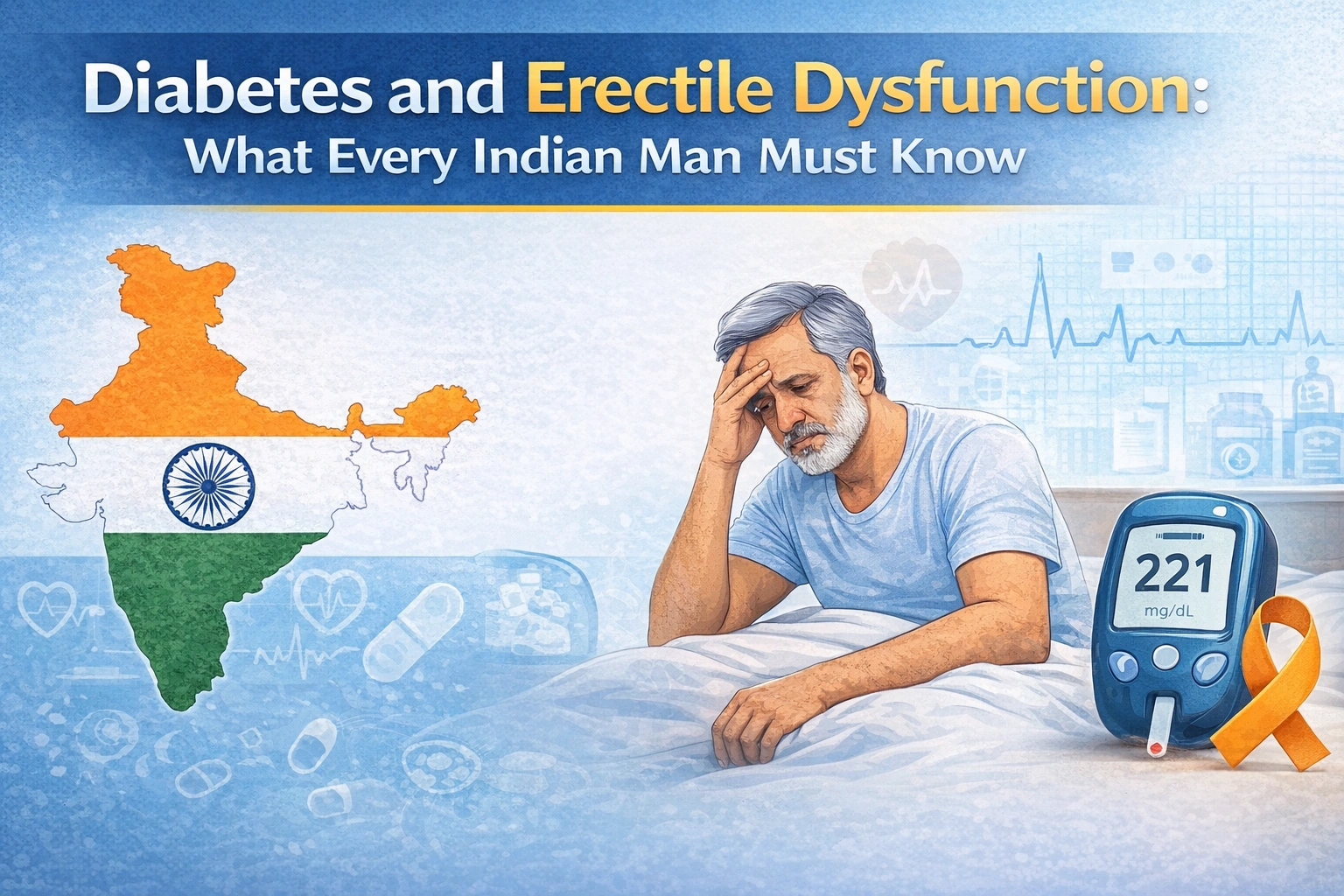
India now accounts for more than one in four diabetes cases worldwide, with an estimated 212 million adults living with the condition. What many of these men don’t realise is that diabetes is silently damaging something far more personal than their blood sugar reports — their sexual health.
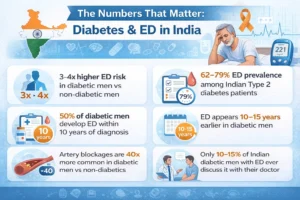
Research consistently shows that men with diabetes face 3 to 4 times higher risk of developing erectile dysfunction compared to non-diabetic men. A North Indian hospital study found ED prevalence as high as 79% among Type 2 diabetes patients. And the cruel twist? Diabetes-related ED often strikes 10 to 15 years earlier than it does in men without diabetes.
Yet, despite these staggering numbers, most diabetic men in India never discuss erection problems with their doctor. The stigma around sexual health, combined with a lack of awareness about the diabetes–ED connection, means millions are suffering in silence while the condition worsens.
In this guide, we break down exactly how diabetes damages your erections, the warning signs to watch for, and what you can do — starting today — to protect and improve your sexual health. If you’re looking for a broader understanding of ED beyond diabetes, we recommend reading our complete erectile dysfunction guide for Indian men.
Men with diabetes face 3–4x higher ED risk due to blood vessel damage, nerve destruction, and hormonal disruption from high blood sugar. The good news: controlling HbA1c, exercising regularly, eating nitric oxide–boosting foods, and using structured natural support can significantly improve erection quality.
The Link Between Diabetes and Erectile Dysfunction: What the Research Says
Getting and maintaining an erection is a complex process that depends on healthy blood vessels, intact nerves, balanced hormones, and the right brain signals all working in sync. Diabetes can disrupt every single one of these pathways. Here’s how:
1. Blood Vessel Damage (Vascular Dysfunction)
An erection fundamentally depends on strong blood flow into the penis. When blood sugar remains elevated over months or years, it damages the inner lining of blood vessels — a condition called endothelial dysfunction. This damage reduces the body’s ability to produce nitric oxide, the key chemical that relaxes penile blood vessels and allows blood to rush in during arousal.
Since the arteries supplying the penis are among the smallest in the body, they’re often the first to show damage — even before the heart or brain arteries are affected. This is why urologists increasingly view ED as an early warning sign of cardiovascular disease, sometimes appearing 3 to 5 years before a heart event.
2. Nerve Damage (Diabetic Neuropathy)
Diabetes is the leading cause of peripheral neuropathy in India. Just as it damages the nerves in your feet and fingers, chronically high blood sugar destroys the delicate cavernous nerves that trigger erections. When these nerves are damaged, the brain’s arousal signals cannot reach the penile tissue properly, making it difficult to initiate or maintain an erection even when desire is present.
3. Hormonal Disruption
Prolonged hyperglycemia can negatively impact the hypothalamus-pituitary-testis axis, leading to reduced testosterone production. Low testosterone reduces libido, energy, and the hormonal drive needed for healthy erections. Studies show that men with poorly controlled diabetes have significantly lower testosterone levels than men with well-managed blood sugar.
4. Structural Changes in Erectile Tissue
Research using electron microscopy has revealed that the erectile tissue of diabetic men undergoes permanent structural changes — including reduced smooth muscle content, increased scar tissue (fibrosis), and fewer healthy endothelial cells. These changes make the penile tissue stiffer and less responsive to blood flow, directly impairing erection quality.
5. Psychological Impact
Living with a chronic condition like diabetes often brings anxiety, depression, and stress — all of which are independent risk factors for ED. When a diabetic man experiences his first erection failure, it frequently triggers performance anxiety, creating a vicious cycle where fear of failure causes further failures.
Risk Factors: What Makes Diabetic ED Worse?
Not every man with diabetes will develop ED. But certain factors significantly increase your risk. Understanding them gives you the power to act early:
- Duration of diabetes: The longer you’ve had diabetes, the higher the risk. Studies show ED severity increases proportionally with diabetes duration. A man with diabetes for 15+ years is far more likely to have severe ED than someone diagnosed 3 years ago.
- Poor blood sugar control (high HbA1c): Consistently elevated HbA1c means sustained damage to blood vessels and nerves. Research from AIIMS Delhi found that HbA1c is an independent predictor of ED severity in diabetic men. Every percentage point increase in HbA1c worsens erection quality.
- Obesity and belly fat: Excess visceral fat worsens insulin resistance, lowers testosterone, and increases inflammation — all of which compound diabetes-related ED. Read more: How obesity causes ED in Indian men.
- Smoking: Smoking accelerates blood vessel damage in diabetic men exponentially. A diabetic smoker faces a dramatically higher ED risk than a diabetic non-smoker. Learn more: Smoking and erectile dysfunction.
- High blood pressure and high cholesterol: Both are extremely common in Indian diabetic men and both independently damage penile blood flow. Additionally, many BP and cholesterol medications themselves can worsen ED.
- Sedentary lifestyle: Lack of physical activity worsens glycemic control, reduces nitric oxide production, and accelerates vascular damage.
- Diabetic complications: Men who already have retinopathy, nephropathy, or peripheral neuropathy are at significantly higher risk for ED, as these indicate advanced vascular and nerve damage.
Warning Signs: How to Spot Diabetes-Related ED Early
Diabetes-related ED rarely appears overnight. It’s a gradual decline that many men dismiss as stress or ageing. Here are the early warning signs to watch for:
- Erections are less firm than before: You can still get an erection, but it’s noticeably softer. This is often the earliest sign of vascular damage from high blood sugar.
- Difficulty maintaining erections during intercourse: Erections fade partway through sex. This suggests the veno-occlusive mechanism (blood trapping) is weakening.
- Morning erections are disappearing: Healthy men typically have 3–5 nocturnal/morning erections. A gradual loss of morning erections in a diabetic man strongly points to physical (not psychological) ED.
- Reduced sexual desire: If your interest in sex has dropped alongside poor blood sugar control, hormonal disruption may be at play.
- Numbness or tingling in extremities: If you’re experiencing neuropathy symptoms in your hands or feet, the same nerve damage is likely affecting your penis.
- Fatigue and low energy: Chronic fatigue with poorly controlled diabetes often correlates with low testosterone and reduced sexual performance.
Critical rule of thumb: If you have diabetes and experience erection problems more than 50% of the time for more than 3 months, see a doctor. Don’t wait. As our comprehensive ED guide explains, early intervention is key — the longer you delay, the more permanent the damage can become.
Managing Blood Sugar: Your First Line of Defence Against ED
Here’s the encouraging news: research clearly shows that improving glycemic control can slow, halt, and in some cases partially reverse diabetes-related erectile dysfunction. Blood sugar management isn’t just about preventing complications — it’s about protecting your sex life.
HbA1c Targets and Erection Quality
Multiple studies have found a direct correlation between HbA1c levels and ED severity. Men who bring their HbA1c below 7% consistently report better erection quality compared to those with readings above 8–9%. Work with your endocrinologist to set an achievable HbA1c target and stick to it.
Diet for Diabetic Men with ED
Your diet should serve two goals simultaneously: controlling blood sugar and boosting vascular health. Here’s what works:
- Nitric oxide–boosting foods: Beetroot (chukandar), spinach (palak), methi leaves, and dark leafy greens are rich in dietary nitrates that your body converts into nitric oxide — the key molecule for blood vessel relaxation and erections. A daily glass of beetroot juice can make a measurable difference.
- Low-glycemic Indian staples: Replace white rice with brown rice or millets (bajra, jowar, ragi). Use dal, rajma, and chana for protein with slow-release carbohydrates. These keep blood sugar stable while providing sustained energy.
- Omega-3 and healthy fats: Walnuts (akhrot), flaxseeds (alsi), and fatty fish improve endothelial function and reduce inflammation. Almonds (badam) and pistachios (pista) are rich in L-arginine, a precursor to nitric oxide.
- Flavonoid-rich fruits: Pomegranate (anaar), amla (Indian gooseberry), berries, and citrus fruits protect nitric oxide from oxidative damage. A Harvard study following 25,000+ men found regular flavonoid intake significantly lowered ED risk.
- Foods to strictly limit: Refined sugar, maida-based snacks, deep-fried foods, sugary beverages, and excessive red meat all spike blood sugar, increase inflammation, and accelerate arterial damage.
Exercise: The Dual Weapon Against Diabetes and ED
Exercise is one of the most powerful tools a diabetic man has against ED. It improves insulin sensitivity, lowers blood sugar, boosts nitric oxide production, increases testosterone, reduces stress hormones, and improves blood circulation — all in one activity.
A meta-analysis of 11 clinical trials found that aerobic exercise improved erection scores by an average of 2.8 points, with men experiencing severe ED seeing improvements of nearly 5 points.
What to aim for: 30–45 minutes of brisk walking, swimming, cycling, or jogging, 4–5 times per week. Add Kegel exercises (pelvic floor training) daily for additional erection support — these specifically strengthen the muscles that maintain erection firmness.
Treatment Options for Diabetic Men with ED
Diabetic ED is considered one of the more challenging forms to treat because it’s typically multi-factorial — involving vascular, neurological, hormonal, and psychological components simultaneously. However, most diabetic men can achieve meaningful improvement with the right combination of approaches:
Medical Treatment
PDE5 inhibitors (sildenafil, tadalafil, vardenafil) remain the first-line pharmacological treatment. However, diabetic men often have lower response rates to these medications compared to non-diabetic men, due to the extent of underlying vascular and nerve damage. Your doctor may need to adjust dosages or try different medications to find what works.
Research suggests that daily low-dose tadalafil (5mg) combined with L-arginine (2,500mg) may offer better long-term outcomes for diabetic men by supporting endothelial recovery alongside the blood-flow boost from the medication.
Testosterone replacement therapy may be considered if blood tests confirm clinically low testosterone levels, which is not uncommon in diabetic men. However, TRT should only be initiated under medical supervision after comprehensive hormonal testing.
Natural and Ayurvedic Support
For diabetic men with mild to moderate ED, or those looking to complement their medical treatment, certain Ayurvedic herbs have shown promising results in clinical research:
- Ashwagandha (KSM-66): Reduces cortisol, supports testosterone production, and improves stamina. A 12-month safety study found 68.7% of participants showed overall clinical improvement, with particularly strong results in men aged 50+.
- Shilajit: Contains fulvic acid and 84+ trace minerals. Research shows it directly supports relaxation of erectile tissue (corpus cavernosum) through parasympathomimetic effects. Also boosts cellular energy and testosterone.
- Gokshura (Tribulus terrestris): Stimulates nitric oxide production — the same pathway that PDE5 inhibitor drugs target. Supports natural testosterone production and reproductive function.
- Korean Red Ginseng: A meta-analysis of randomised trials showed significant improvement in erectile function scores. A clinical study found 60% therapeutic success vs 30% for placebo.

A Practical Action Plan for Diabetic Men
If you have diabetes and you’re experiencing erection problems — or you want to prevent them — here’s a structured action plan:
- Get your HbA1c tested today. If it’s above 7%, work with your doctor to bring it down. This is the single most impactful thing you can do.
- Talk to your doctor about ED. Don’t wait for them to ask. Request an IIEF-5 assessment and a testosterone level check. Ask whether any of your current medications could be contributing to ED.
- Start exercising this week. Even 30 minutes of brisk walking, 5 days a week, can improve both blood sugar and erectile function within 6–12 weeks.
- Overhaul your diet. Shift toward the nitric oxide–boosting, low-glycemic Indian foods described above. Cut refined sugar and deep-fried snacks.
- Quit smoking immediately. Research shows measurable improvement in erectile capacity within just one day of quitting.
- Consider natural support. If your ED is mild to moderate and your doctor approves, a structured Ayurvedic supplement like PureNyte can support your recovery alongside lifestyle changes and medical treatment.
- Reassess after 8–12 weeks. Track your progress and adjust the plan with your healthcare provider. Don’t expect overnight results — sustained improvement takes consistency.
Frequently Asked Questions
Q: Can diabetes cause permanent erectile dysfunction?
If left unmanaged for years, diabetes can cause irreversible nerve and blood vessel damage that leads to permanent ED. However, when detected and treated early, many men experience significant improvement through blood sugar control, lifestyle changes, and appropriate treatment.
Q: What percentage of diabetic men have ED in India?
Hospital-based Indian studies report ED prevalence between 32% and 79% among Type 2 diabetic men, depending on diabetes duration, glycemic control, and age. A meta-analysis of Indian studies confirms that ED is one of the most underreported complications of diabetes in the country.
Q: Does controlling blood sugar improve erections?
Yes. Multiple studies demonstrate that men who achieve better glycemic control (HbA1c below 7%) report improved erectile function. Controlling blood sugar slows the vascular and nerve damage that causes ED and may partially restore function if the damage hasn’t become permanent.
Q: Can I take Viagra if I have diabetes?
PDE5 inhibitors like sildenafil (Viagra) and tadalafil (Cialis) are generally safe for diabetic men, but they may be less effective due to the extent of vascular damage. Always take them under your doctor’s supervision, especially if you’re on nitrate medications for heart conditions or take blood pressure drugs.
Q: Is diabetes-related ED psychological or physical?
A: It’s usually primarily physical (vascular and neurological damage from high blood sugar), but it almost always develops a psychological component as well. The anxiety and stress caused by repeated erection failures create a compounding cycle. Addressing both physical and psychological aspects gives the best results.
Q: Can Ayurvedic herbs help with diabetic ED?
A: Certain Ayurvedic herbs like Ashwagandha, Shilajit, and Gokshura have clinical evidence supporting their role in improving erectile function, testosterone levels, and nitric oxide production. They can complement medical treatment and lifestyle changes, particularly for mild to moderate ED. Always consult your doctor before combining supplements with diabetes or ED medications.
Q: At what age does diabetes-related ED usually start?
ED occurs 10–15 years earlier in diabetic men compared to non-diabetic men. While ED in non-diabetic men typically becomes common after 50, diabetic men may start experiencing problems in their late 30s or early 40s — sometimes even earlier if blood sugar is poorly controlled.
Q: Does metformin cause erectile dysfunction?
Some men report ED as a side effect of metformin, though research findings are mixed. Interestingly, some studies suggest metformin may actually improve erectile function by reducing sympathetic nerve overactivity. If you suspect your medication is contributing to ED, discuss alternatives with your doctor — never stop diabetes medication on your own.
Conclusion: Diabetes Doesn’t Have to End Your Sex Life
Diabetes and erectile dysfunction are deeply connected — but a diagnosis of diabetes does not mean you’re destined for a lifetime of sexual problems. The men who fare best are those who act early: control their blood sugar aggressively, make lifestyle changes, seek medical advice without shame, and build a multi-layered support plan that includes proper nutrition, regular exercise, medical treatment when needed, and structured natural supplementation.
For a complete understanding of ED — including all causes, symptoms, diagnosis methods, treatment options, and the role of Ayurvedic herbs — read our guide to Erectile Dysfunction in India.
Remember: Your erection health is your cardiovascular health. Protecting one protects the other.
Disclosure: This content is intended for general information and educational purposes for men with diabetes and/or mild to moderate ED. It is not a substitute for professional medical advice, diagnosis, or treatment. Anyone with severe, sudden, or painful symptoms should seek urgent medical evaluation. PureNyte is a dietary supplement and is not intended to diagnose, treat, cure, or prevent any disease. Always consult your doctor before combining supplements with diabetes medications.